Optimizing charcoal making machine for Maximum Environmental Impact
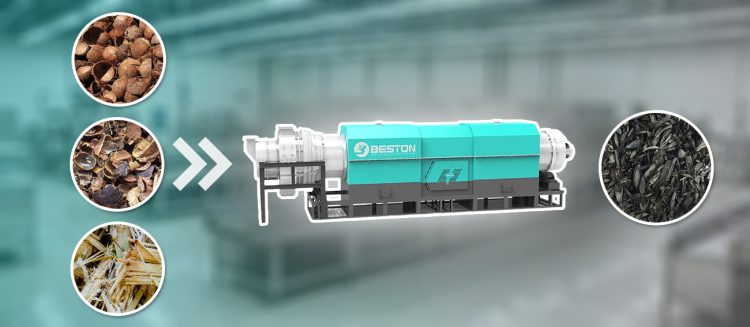
Efficient carbonization technologies are increasingly central to sustainable waste management strategies. A modern charcoal making machine is no longer evaluated solely by its output capacity, but by its ability to reduce emissions, improve energy recovery, and convert diverse biomass into stable carbon products. Optimization focuses on thermochemical stability, feedstock adaptability, and system-level heat integration. When properly engineered, a straw charcoal making machine can transform agricultural residues that would otherwise be openly burned into valuable biochar with long-term soil benefits. At industrial scale, the integration of a biomass carbonization plant enables continuous conversion of organic waste streams into carbon-rich materials while minimizing environmental burden. The shift from conventional combustion to controlled pyrolysis represents a significant technological transition, where precision control and reactor design determine both efficiency and ecological impact.
Process Efficiency and Feedstock Conversion
Maximizing environmental performance begins with feedstock preparation and thermal uniformity. Moisture content regulation is essential, as excess water reduces carbon yield and increases auxiliary energy demand. In a high-performance charcoal making machine, staged drying zones are integrated to stabilize biomass before pyrolysis. This improves volatile release consistency and reduces tar formation.
Agricultural residues processed through a straw charcoal making machine require optimized particle size distribution to ensure uniform heat penetration. Irregular feedstock leads to incomplete carbonization and elevated particulate emissions. Advanced feeding systems employ screw conveyors and sealed hoppers to maintain oxygen-limited conditions, preventing partial combustion.
Within a biomass carbonization plant, heat recovery loops are often implemented to reutilize syngas generated during pyrolysis. This recovered energy supports reactor preheating, significantly reducing external fuel requirements. Such closed-loop thermal integration enhances overall system efficiency while lowering greenhouse gas intensity per ton of biochar produced.
Advancements in Biomass Carbonization Systems
Modern systems emphasize modular scalability and process control precision. A biomass carbonization plant typically integrates multiple reactors operating in parallel or sequential cycles, allowing continuous production with minimal downtime. This structural configuration improves throughput stability and reduces thermal fluctuation stress on equipment.
Automation has become a defining feature in next-generation systems. Temperature sensors, pressure regulators, and gas composition analyzers provide real-time feedback, ensuring optimal carbonization conditions are maintained. In a well-calibrated charcoal making machine, pyrolysis temperature is typically maintained within a controlled range to maximize fixed carbon content while limiting volatile organic compound release.
Energy efficiency improvements are further achieved through catalytic gas cleaning and secondary combustion chambers. These systems oxidize residual gases, converting them into usable thermal energy rather than releasing them into the atmosphere. When applied at scale, such enhancements significantly reduce the carbon intensity of biomass conversion processes and improve lifecycle environmental performance.
Biochar Reactor Design Considerations
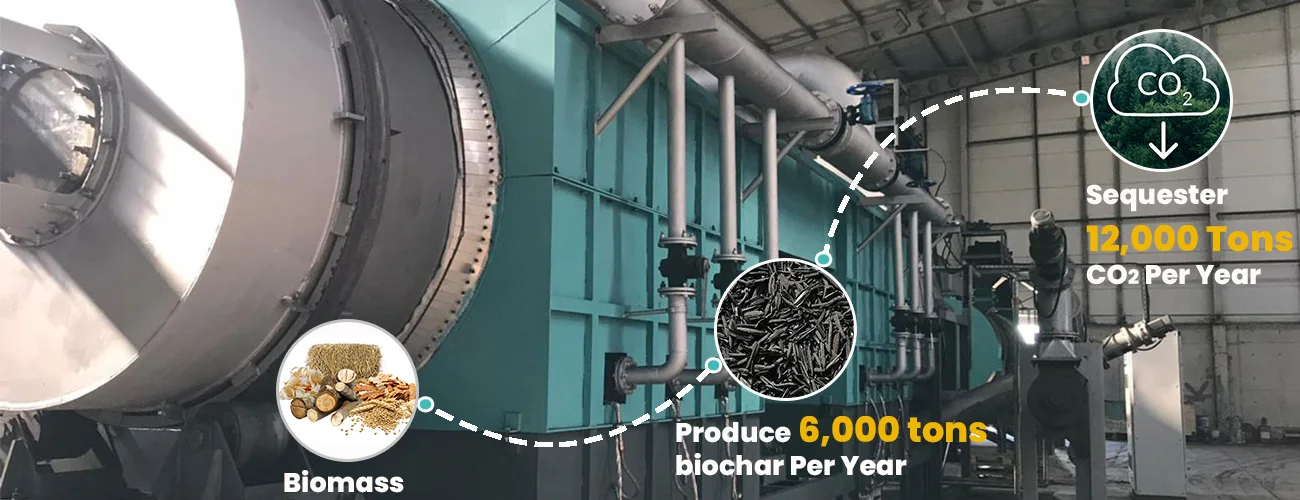
Reactor configuration is a critical determinant of system efficiency and emission control. A high-performance biochar reactor design prioritizes uniform heat distribution, controlled residence time, and effective gas-solid separation. Rotary kiln, screw-type, and vertical shaft reactors each offer distinct thermodynamic advantages depending on feedstock characteristics.
In a well-optimized biochar reactor design, internal flow dynamics are engineered to minimize dead zones where incomplete pyrolysis may occur. This ensures consistent carbonization and improves the structural stability of the final biochar product. Additionally, refractory lining materials are selected to withstand prolonged exposure to high-temperature reductive environments.
The integration of sealing systems is equally important. Oxygen ingress must be minimized to prevent unwanted combustion reactions. A carefully engineered interface between feedstock input and discharge systems ensures continuous operation without compromising atmospheric isolation. These design principles directly influence the performance of any industrial charcoal making machine operating under continuous or semi-continuous conditions.

Emissions Control and Environmental Optimization
Environmental impact reduction depends heavily on post-processing gas treatment and emission capture technologies. Modern systems incorporate multi-stage filtration units that remove particulate matter, condensable tars, and acidic gases from pyrolysis effluent streams. This ensures compliance with stringent environmental standards while maintaining operational efficiency.
A fully optimized biomass carbonization plant often employs flue gas recirculation, which reduces thermal losses and stabilizes internal reactor temperatures. This method also lowers overall fuel consumption and improves carbon conversion efficiency. When combined with optimized combustion chambers, emission profiles can be significantly reduced without sacrificing productivity.
In addition, the integration of a straw charcoal making machine into decentralized agricultural systems supports localized waste valorization. This reduces transportation emissions and enables circular carbon utilization at the source. The resulting biochar can be applied to soil systems, improving water retention, nutrient cycling, and long-term carbon sequestration. Through coordinated reactor engineering, energy recovery, and emissions control, a modern charcoal making machine becomes a critical tool in advancing low-carbon industrial ecosystems.